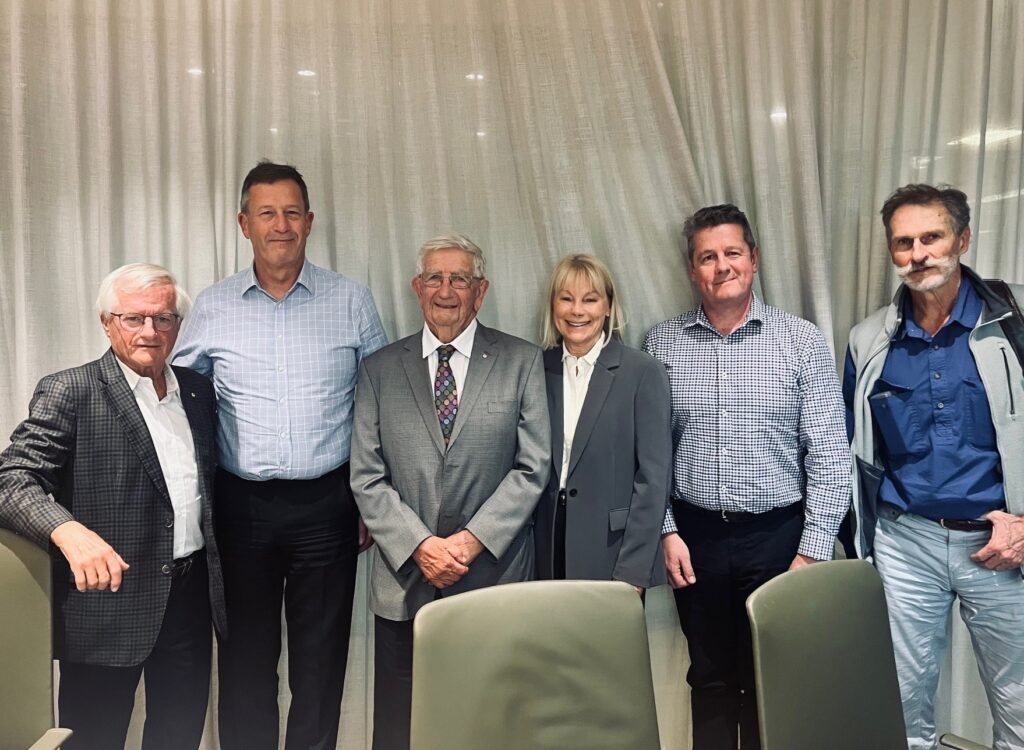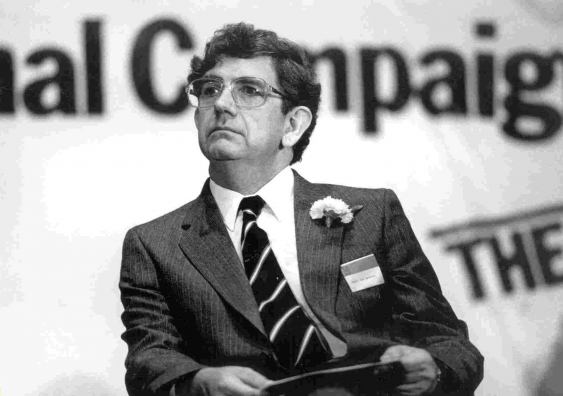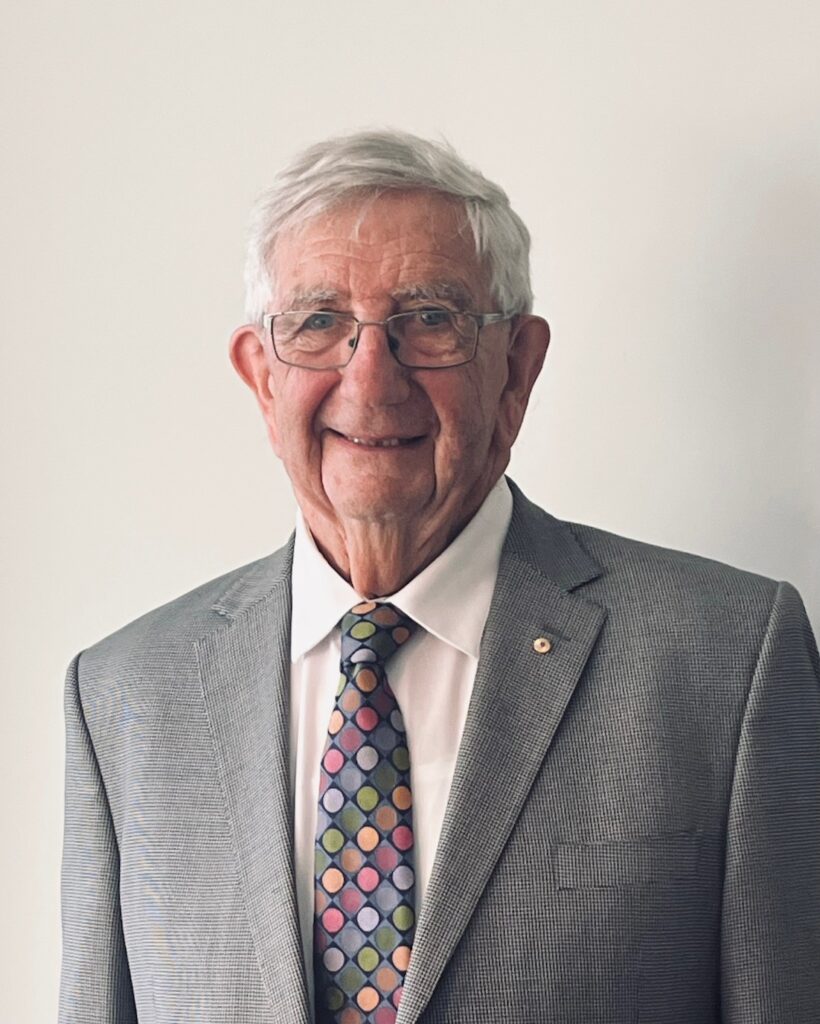
Professor Ian Webster AO stepped down from the Sir William Tyree Foundation board this week, after 55 years as a director.
Emeritus Professor of Public Health and Community Medicine at UNSW Sydney, and a close friend of the late Sir William’s, Ian has had a formidable career in medicine and education. He has made contributions over many years to health and medical research, clinical practice and education, including work on addiction, mental health and the impact of homelessness.
In 1970 Ian was a physician working in Melbourne when he saw an advertisement for a role in Sydney. A new organisation, Medicheck, needed a Medical Director, and he thought that sounded interesting.
‘I was appointed to the role and in the process, I met Bill Tyree.’
Sir William (Bill) had created and funded Medicheck, which was a comprehensive medical screening centre.
Bill was a relatively young man at that time who had started an industrial business building transformers. ‘He was a very driving personality. In fact, a bit terrifying to a young doctor to come into such close contact with a developing industrialist.’
‘He was an engineer, but he was profoundly interested in health and medicine. What he wanted to create was something which was self-perpetuating, something that would go on and something that would leave a legacy.’
Bill had been inspired by a recent trip to the United States and could see the possibility of combining medicine with engineering principles, which could allow people to do a comprehensive series of medical tests. Screening for the early stages of diabetes, blood pressure, coronary heart disease, and other conditions, could help GPs to diagnose and treat patients.
Bill thought this would be an excellent approach to preventive medicine, and what’s more, you could do it all in one appointment.
When Ian arrived in Sydney the Medicheck centre was being built in Bathurst Street. He was principally involved in assessing the tests that were being developed, and writing the questionnaire which everybody completed in front of a computer monitor.
‘Bill put in an IBM 1800 computer. Well, compared with these days, that occupied a whole room and was air conditioned. I had to learn Fortran, which was a computer language new to me.’
People would visit, referred by a doctor, and initially would enter a cubicle where they answered a questionnaire which would be recorded by a computer program. And then they’d proceed around to the various stations where tests were done.
Then, finally, a computer generated report would be produced, which Ian would check and sign, and it would be sent to the referring doctor. This was subsidised by the federal government.
Ian was interviewed quite often by the popular radio and television programmes of the time. He became known in Australia as the person to go to about screening for health problems, but he wasn’t keen on the celebrity. He wanted to be known as someone with a wider contribution to make than being the ‘go-to man for issues about screening’. That’s why, after about three years, he resigned from his role. However, he continued to Chair the Advisory Committee for the Centre, and he and Bill retained a continuing relationship and respect for each other.
Ian’s world of medicine and universities was very different to the world Bill occupied as an industrialist and manufacturer. ‘However, Bill wasn’t just about making money, it was about producing and manufacturing and creating things. He was a creator of things.’
The relationship between the two men worked because ‘he respected me as an honest, ethical person. Through his lifetime Bill would often consult me about medical issues and ask me to investigate problems that he had seen. I became a trusted advisor, his person for medical things.’
Ian’s career saw him focus on mental health, homelessness and drug addiction. All areas unfamiliar to Sir William. However, when Ian retired as President of the New South Wales Association for Mental Health and they gave him a send-off, sympathetic to the problems, Sir William and Lady Tyree attended the dinner. Ian says he wasn’t sure how meeting people who had very different experiences and attitudes to life would turn out. Ultimately, to Bill’s great credit, he donated money to the Association for Mental Health to fund scholarships for people with mental illness to get training.
Ian has remained a Tyree Foundation board director out of loyalty to his friend Bill, but he has also derived a lot of satisfaction from the experience.
‘Bill was always interested in education, in medicine and engineering, but he got a bit bruised by the Medicheck experience when the Government stopped subsidising multiphasic screening, and his interests shifted more to supporting engineering initiatives. My involvement was important because it kept a focus on medicine. We’ve had the potential to fund things like the Tyree Institute of Health Engineering, which in a way takes us back to when I was involved in 1971, bringing engineering and medicine together for the good of public and community health.’
The Foundation’s support for the Powerhouse Museum in Parramatta is also meaningful for Ian ‘I have a very soft spot for the people of south western Sydney because of their unmet social and health needs, following my work at Liverpool Hospital in South Western Sydney.’
With respect to another of the Foundation’s significant interests, Ian tells an illuminating story about Sir William and nuclear power. ‘Bill was interested in nuclear power. I belonged to a group of doctors called the Doctors Reform Society, and most of my colleagues were anti-nuclear. My own views were at least partly aligned that way.’
Knowing this was the case, Bill asked Ian to bring some of his colleagues along to a breakfast gathering. They arrived to find the Managing Director of British Nuclear Fuels, and the Managing Director of the European Nuclear Fuel Organisation had also been invited. ‘So here we have these radical lefty doctors and these powerful people of the nuclear industry. We had a discussion, and I don’t think it resolved anything. It was a fairly indigestible breakfast. But that that just shows you the sort of person Bill was, he wanted to bring people together, and he was unafraid of confrontation.’
Ian believes that Bill has left a powerful legacy through the terms of his will, and the way the Foundation’s governance has been established. He is confident of continued resourcing and support, and feels that alongside the Tyree family, Tyree employees can be proud of the positive impact their work has in the community.
Foundation Chair, Robbie Fennell believes that Ian’s contribution has been remarkable, ‘I will miss the care and focus Ian brings to board discussions, and his strong commitment to young people who have experienced disadvantage’
We thank Ian for his dedication and guidance over all these years.